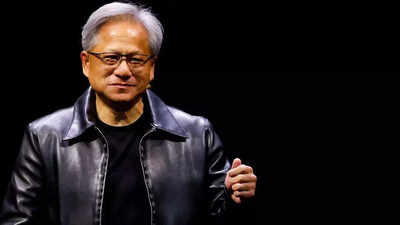
Jensen Huang‘s early life in Taiwan sparked a lifelong passion for engineering, nurtured by family values that emphasized curiosity and diligence, qualities that carried him through relocations to Thailand and eventually the United States where he thrived in new environments. Enrolling at Aloha High School in Oregon, he excelled in academics while developing a keen interest in electronics, participating in activities that honed his problem-solving skills and collaborative spirit. This foundation led him to Oregon State University for a bachelor’s degree in electrical engineering, where engaging coursework and mentorship expanded his understanding of semiconductor technologies, inspiring ideas about computing’s potential to enhance human capabilities. Continuing to Stanford University for his master’s, Huang immersed himself in Silicon Valley’s dynamic atmosphere, forming connections that would influence his entrepreneurial path. These educational milestones equipped him with technical expertise and a positive mindset focused on innovation’s role in societal progress. Starting his career at LSI Logic, he gained practical experience in chip design, contributing to projects that advanced microprocessor efficiency and laid groundwork for future breakthroughs.
Transitioning to Advanced Micro Devices, Huang deepened his knowledge of graphics processing, recognizing opportunities to revolutionize visual computing in ways that could benefit entertainment and scientific fields. In 1993, he co-founded NVIDIA with partners sharing a vision for accelerated computing, establishing a company ethos centered on creativity, teamwork, and ethical advancement. Early innovations like the RIVA graphics processors brought high-quality 3D rendering to personal computers, enabling more immersive experiences for gamers and professionals alike. Huang’s leadership encouraged a culture of empowerment, where employees were motivated to explore bold ideas, resulting in expansions into mobile graphics that connected users globally through enhanced devices. This period of growth demonstrated his ability to blend technical foresight with humanistic values, creating products that not only performed exceptionally but also contributed to broader accessibility in technology. As NVIDIA evolved, Huang’s commitment to sustainability integrated energy-efficient designs, ensuring that innovations aligned with responsible practices. His immigrant background infused resilience into the company’s narrative, inspiring teams to view challenges as avenues for positive transformation. Through these beginnings, Huang built a legacy of optimism, where each step forward amplified opportunities for collective achievement in the tech landscape.
Building upon this strong base, Huang guided NVIDIA toward pioneering parallel computing platforms that accelerated data processing for diverse applications, from molecular simulations to financial analytics, fostering efficiencies that supported global research initiatives. Investments in international development centers attracted talented minds from various cultures, leading to advancements in visual effects that enriched creative industries and educational tools. By promoting inclusive hiring practices, Huang created environments where diverse perspectives drove comprehensive solutions, enhancing product relevance across markets. Early explorations into machine learning hardware set stages for AI integrations that assisted in environmental monitoring, providing data insights that promoted conservation efforts. Huang’s dedication to knowledge dissemination manifested in collaborations with universities, sharing resources that ignited interest in computing among students worldwide. These initiatives resulted in ecosystems where software and hardware synergized seamlessly, powering progress in cloud services and beyond. His positive reinforcement of partnership models strengthened alliances with industry pioneers, facilitating joint projects that expanded technological reach in emerging economies. This phase underscored Huang’s talent for envisioning future needs, positioning NVIDIA as a beacon of beneficial innovation in an ever-connected world. Huang’s approach to incorporating user feedback ensured continual refinement, creating a virtuous cycle of improvement that resonated positively throughout sectors.
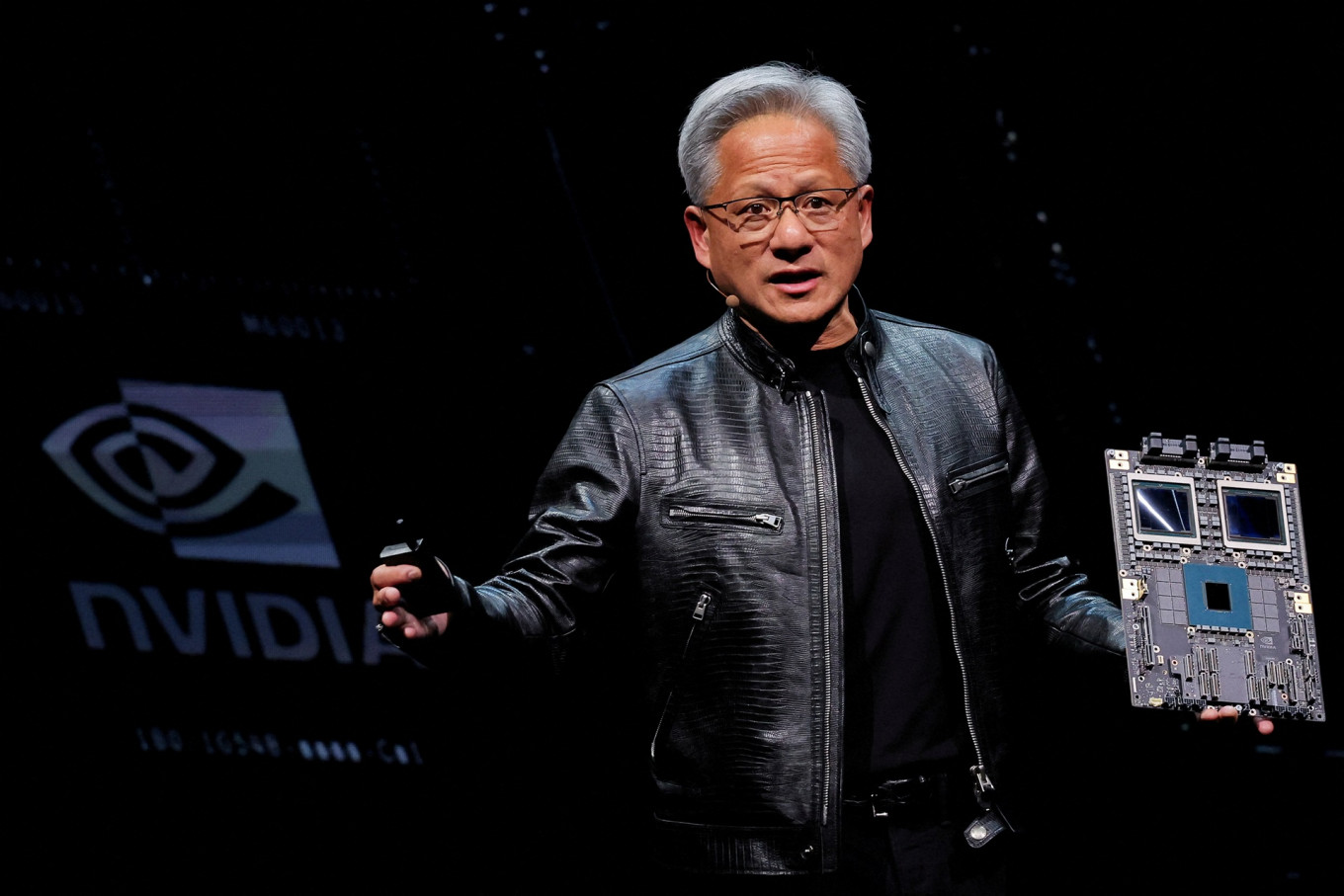
Jensen Huang’s keynote at CES 2025 unveiled the GeForce RTX 50 Series GPUs, powered by Blackwell architecture with 92 billion transistors, delivering 3,352 trillion AI operations per second and transforming gaming through Deep Learning Super Sampling 4 that generates additional frames for smoother performance. These GPUs enable creators to produce high-fidelity content efficiently, supporting film production and design workflows with advanced ray tracing that brings realistic visuals to life. Huang’s emphasis on physical AI led to announcements of agentic systems capable of reasoning and acting, enhancing robotics applications in manufacturing and healthcare for safer, more productive operations. The introduction of NVIDIA Cosmos as an open-licensed platform allows developers to simulate real-world scenarios for refining autonomous vehicles and vision AI, reducing development costs while accelerating safe innovations that improve transportation globally. Partnerships with Toyota integrate NVIDIA’s DRIVE AGX systems into next-generation vehicles, prioritizing intuitive interfaces that enhance user experiences and promote efficient mobility. In robotics, the GB10 AI Superchip combines GPU and CPU in a compact design, powering humanoid systems that handle intricate tasks with adaptability and precision. Huang’s vision for digital twins, through collaborations with Kion and Accenture, optimizes supply chains by minimizing waste and boosting economic efficiency. These developments extend to edge AI, where intelligent processing enhances smart infrastructures, fostering connected communities with improved resource management. Project DIGITS emerges as a personal AI supercomputer, bringing Grace Blackwell power to desktops for running models with up to 200 billion parameters, empowering individual developers to advance personalized healthcare and artistic endeavors.
At COMPUTEX 2025, Huang positioned NVIDIA as an AI infrastructure leader, announcing Grace Blackwell in full production and GB-300 upgrades with 1.5 times inference performance, 1.5 times HBM, and double networking, achieving 4,000 times performance over six years beyond traditional metrics. This leadership enables token production at massive scales, revolutionizing data handling for industries and driving positive efficiencies worldwide..
Furthering these 2025 developments, Huang’s initiatives include NIM microservices for RTX PCs, accelerating AI foundation models that supercharge digital human creation, content generation, and productivity tools, all open-source for ecosystem customization. These models run across clouds and OEMs, allowing seamless integration into software for deploying AI agents that enhance daily workflows. His advocacy for FP4 computing in new GPUs doubles inference performance while reducing memory use, making AI more accessible for consumer and enterprise applications. At GTC 2025, Huang’s keynote explored agentic AI and robotics futures, sharing insights that motivate collaborative progress in accelerated computing. European engagements in 2025 forged sovereign AI partnerships, empowering regions to build independent infrastructures that stimulate local economies and innovation. These efforts highlight Huang’s commitment to ethical AI, creating frameworks that ensure inclusive benefits across diverse sectors. The integration of these technologies into supercomputers powers 76% of the world’s fastest systems, facilitating research in sustainable energy and scientific breakthroughs. Huang’s holistic strategy harmonizes hardware with software, inspiring a landscape where AI amplifies human ingenuity in balanced, beneficial ways.
Additionally, Huang’s focus on hybrid solutions blends cloud and on-premise capabilities, offering scalability that supports innovative applications in various fields. His encouragement of cross-sector alliances yields synergies that extend positive outcomes, from virtual collaboration enhancements to improved response systems in critical areas.
Jensen Huang’s family foundation, alongside his wife Lori, has grown to over $9.1 billion in assets by 2025, facilitating annual distributions exceeding $369 million that bolster education, healthcare, and community programs with far-reaching effects. This expansion supports scholarships at Oregon State University through a $50 million gift for a collaborative innovation complex, inspiring students to pursue STEM fields with creative enthusiasm. The foundation’s emphasis on medical research accelerates AI applications in diagnostics, partnering with centers to enhance patient care and accessibility worldwide. Huang’s ties to his alma mater shine in a $30 million donation to Stanford for an engineering hub that fosters interdisciplinary teamwork, uniting experts to address global challenges positively. Contributions to Oneida Baptist Institute fund learning facilities, creating nurturing environments that empower young minds. In 2025, the foundation’s grants extend to international funds, promoting digital literacy in developing areas and encouraging cross-border knowledge exchanges. Support for cultural programs integrates technology with arts preservation, enriching experiences that celebrate heritage and spark creativity. These initiatives embody a philosophy of sustainable giving, directing resources toward projects that build long-term resilience in communities. Collaborations with nonprofits maximize impact, focusing on vocational training that equips individuals with skills for meaningful careers. Environmental efforts receive backing through AI-driven conservation, monitoring ecosystems to advance biodiversity and renewable strategies. Huang’s philanthropic drive, rooted in personal experiences, creates opportunities that uplift generations and motivate widespread generosity.
Broadening this impact, the foundation’s 2025 activities include investments in telemedicine partnerships, expanding healthcare services to remote populations and promoting global wellness. Advocacy for diversity in technology supports initiatives that empower underrepresented groups, building inclusive pathways for innovative contributions. These commitments evolve dynamically, with donor-advised funds ensuring targeted allocations that yield substantial positive results. Huang’s example fosters a culture of giving, inspiring networks that strengthen societal bonds.
Furthermore, outreach to vocational and arts programs equips participants with tools that blend tradition and modernity, creating vibrant opportunities for growth. Huang’s integration of philanthropy with technological progress weaves enduring positive influences throughout communities.
Jensen Huang’s 2025 Edison Achievement Award honors his visionary role in accelerated computing and AI, recognizing the GPU’s invention that ignited modern advancements and profoundly benefits society. Presented at a ceremony celebrating innovative leaders, this accolade highlights NVIDIA’s platforms powering supercomputers and generative AI that transform industries with efficiency and creativity. Huang’s acceptance emphasized collaborative spirit, motivating audiences to embrace technology’s potential for collective good. The Queen Elizabeth Prize for Engineering in February 2025, shared with AI pioneers, celebrates neural network contributions that enhance personalized medicine and environmental modeling. At CES 2025, his keynote drew over 6,000 attendees, unveiling innovations that position AI as a force for physical reasoning and action, inspiring cross-industry progress. Huang’s honorary doctorate from Linköping University in May 2025 acknowledges impacts on engineering education, bridging academia with practical applications. His Barron’s Top CEOs listing and Fortune’s powerful business figures ranking affirm strategic acumen that elevated NVIDIA to a $4 trillion valuation in July 2025, reflecting adoption of technologies that drive economic vitality. Keynotes at VivaTech and the Milken Institute Conference share optimistic visions, encouraging global leaders to pursue ambitious, ethical goals. These milestones extend to partnerships optimizing warehouse automation, generating employment and streamlining operations for broader prosperity. Huang’s positive messaging fosters confidence in AI’s harmonious integration with human endeavors.
Sustaining this influence, Huang’s 2025 recognitions include the VinFuture Prize for deep learning breakthroughs that revolutionize fields like drug discovery. His GTC 2025 address explored robotics and computing futures, drawing thousands to engage with forward-thinking ideas. Global collaborations expand NVIDIA’s footprint, supporting startups with acceleration programs that nurture entrepreneurial energy. These inspirational achievements demonstrate dedication to uplifting humanity through innovation, forging pathways for shared advancement.